
Low-strain, hammer impact
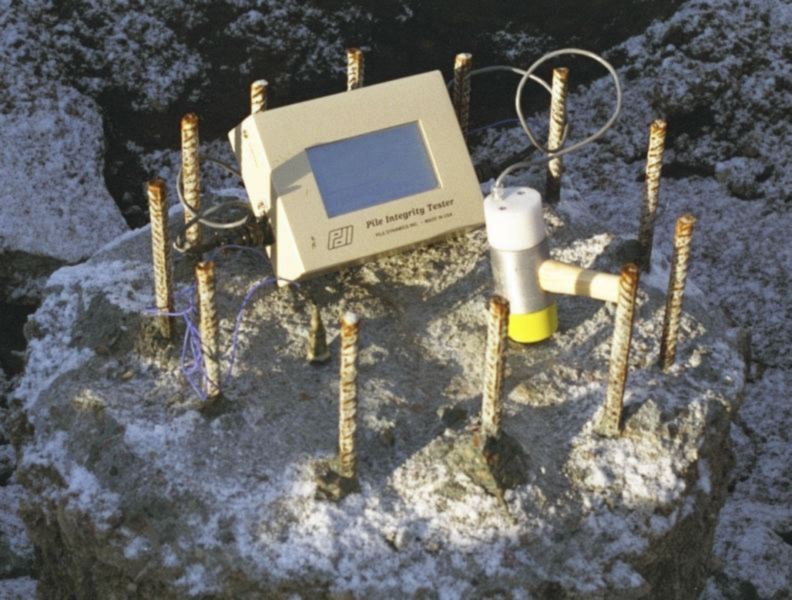
Impulse-echo with a special plastic hammer and accelerometer. Large quantities in one day, six PIT devices in stock.
Impulse-echo, PIT
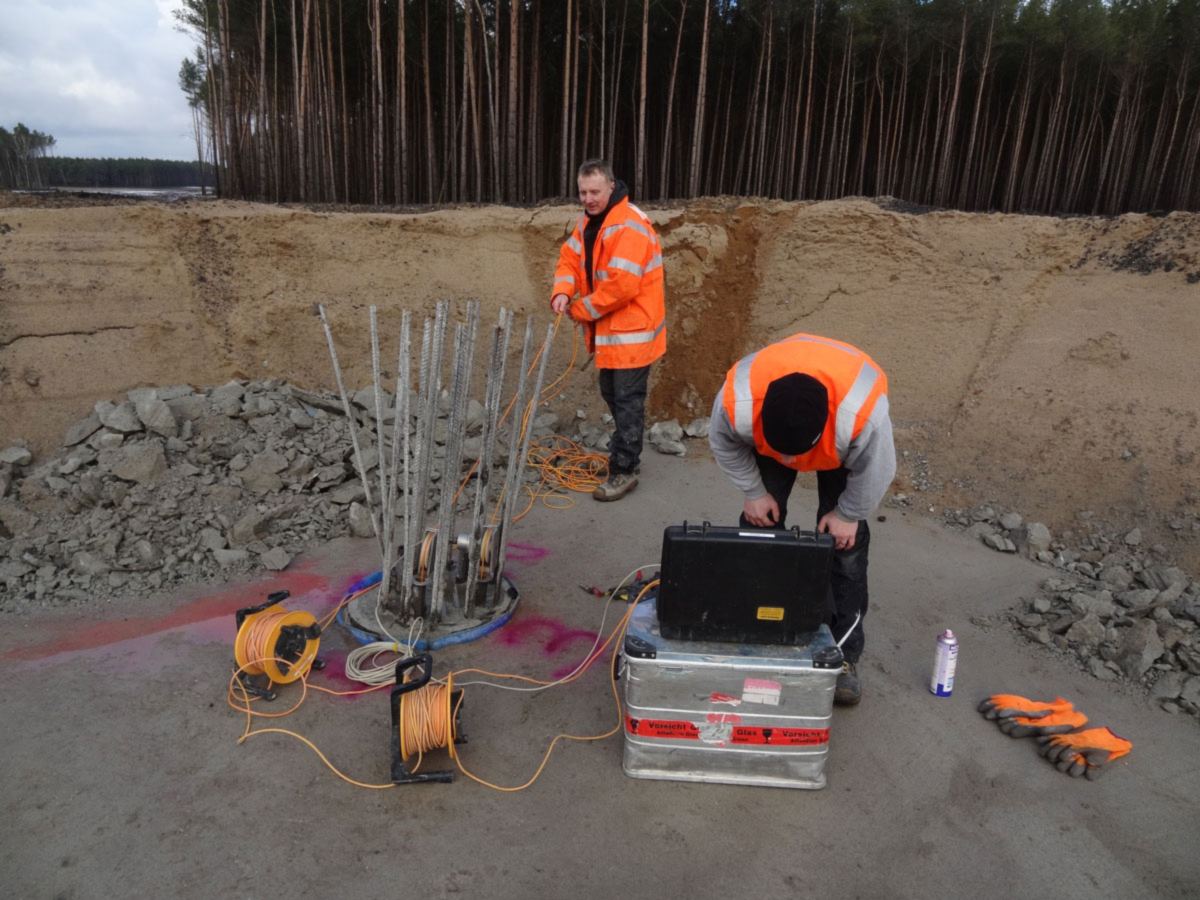
Low-strain, cross-hole and thermal integrity testing (TIP). Thousands of piles per year, every defect documented. The finding holds up in court, not only in a folder.
The method is based on the impulse-echo principle. A blow with the hand hammer initiates a stress wave that travels through the pile at a material- and age-dependent speed. If it hits an impedance change, such as a cross-section change, an echo arrives at the pile head and is recorded.
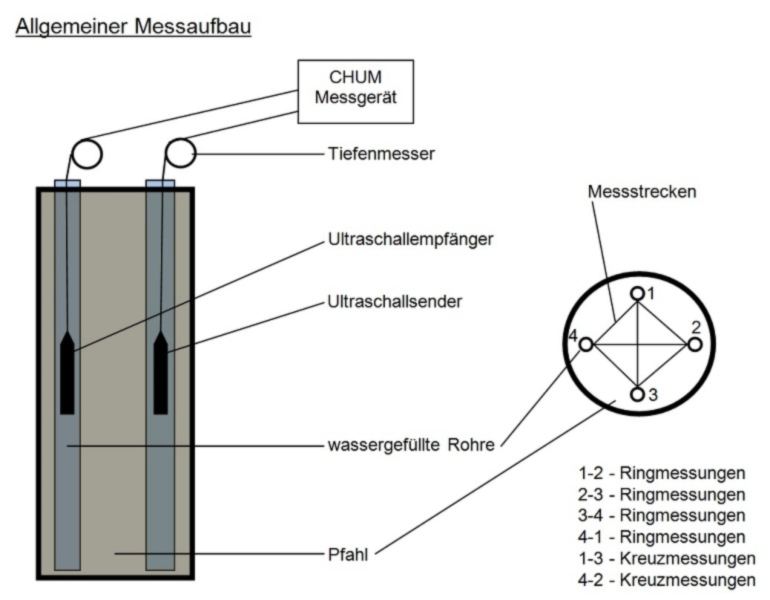
In the cross-hole method, transmitter and receiver probes move simultaneously in two water-filled measuring tubes. The ultrasound wave travels through the concrete horizontally, the depth is measured continuously. The method is non-destructive and made for large quantities. In one year we tested over 9,000 piles this way.
Curing concrete releases heat. Temperature sensors inside the pile record this process over the entire pile length while the concrete hardens.
A larger cross-section produces more heat, a smaller one less. Cross-section changes can be identified from the deviations, without exposing the pile and without waiting for the test age.
Impulse-echo with a special plastic hammer and accelerometer. Large quantities in one day, six PIT devices in stock.
Impulse-echo, PIT
Transmitter and receiver in water-filled measuring tubes, depth gauge on the cable. For large bored piles and high verification requirements.
CHUM, CSL
Temperature measurement inside the pile while the concrete cures. Deviations in the heat curve reveal cross-section changes without exposing the pile.
measured during curing
Determine the length of existing piles, even when no records exist anymore. Signal travel time instead of paperwork.
Existing and new build
All questions on process, methods, standards and scheduling are in the FAQ section.
Tell us the project, the number of piles and the planned test load. You will receive a test concept with a quote within two business days.