Compression load test
All pile types, force or displacement controlled, with or without pile instrumentation to measure skin friction, base resistance and integrity.
up to 40,000 kN
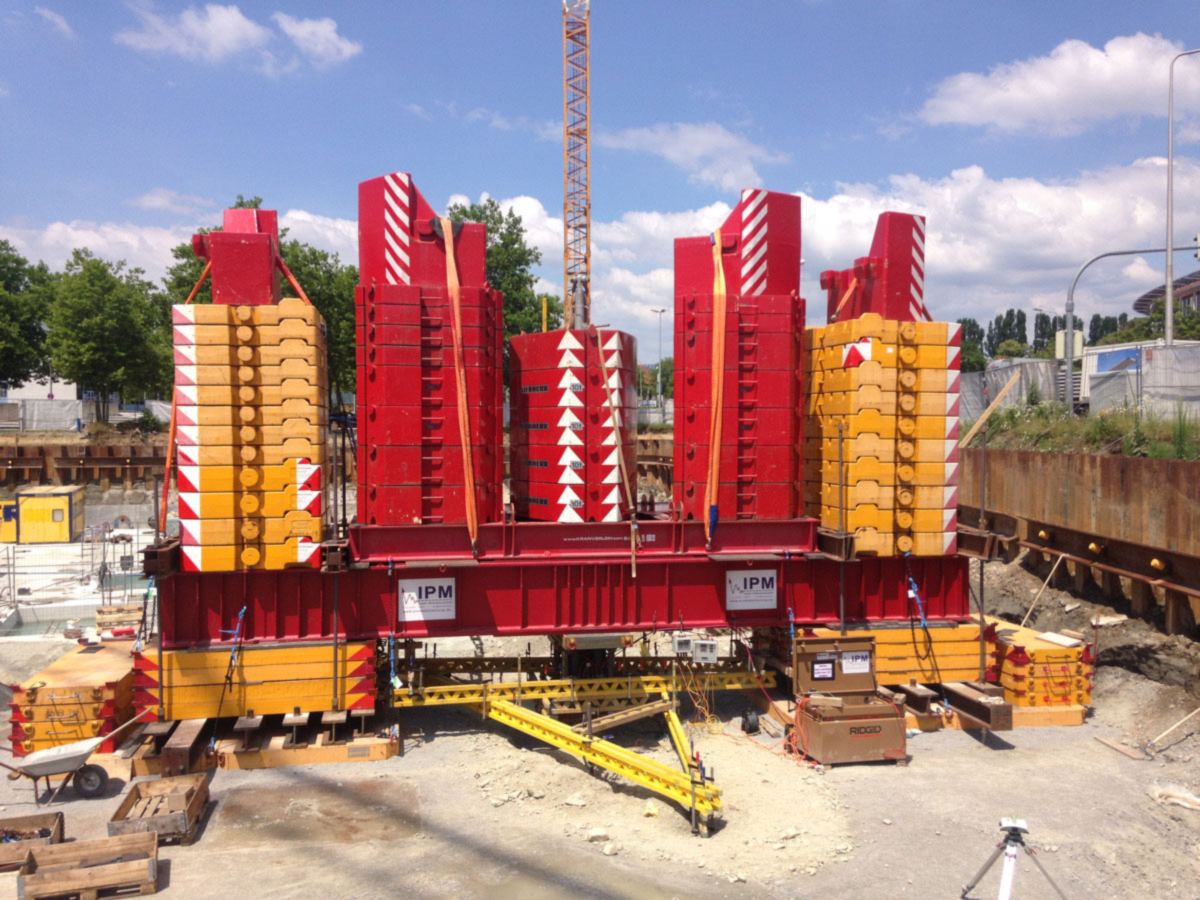
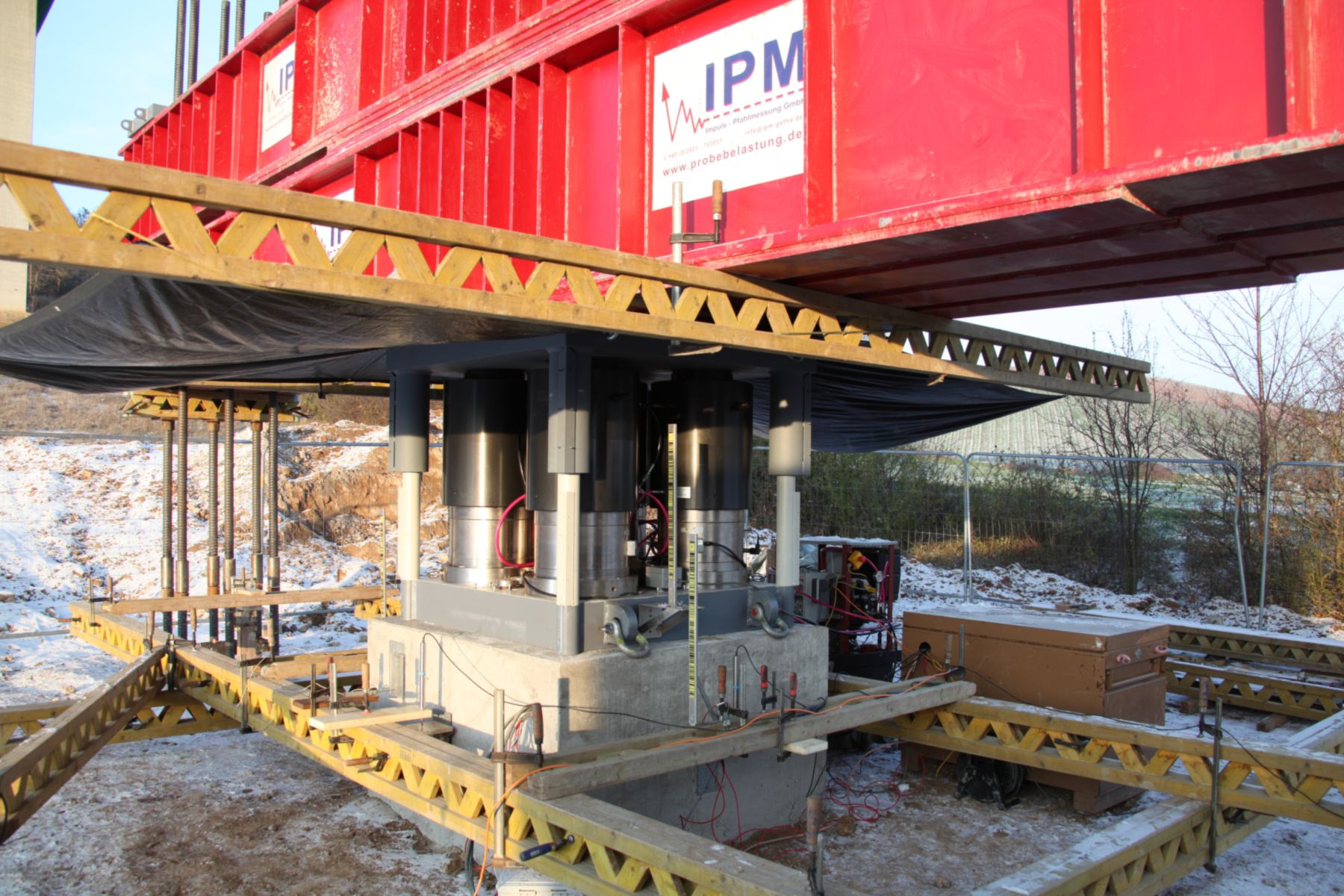
Up to 40,000 kN with our own loading platform and beam system. Compression, tension, horizontal, cyclic. Where others limit the test load, our standard case begins.
The test pile is loaded in steps, displacement is measured at every load step. The ultimate bearing capacity results from load and displacement, not as an assumption but as a measured value.
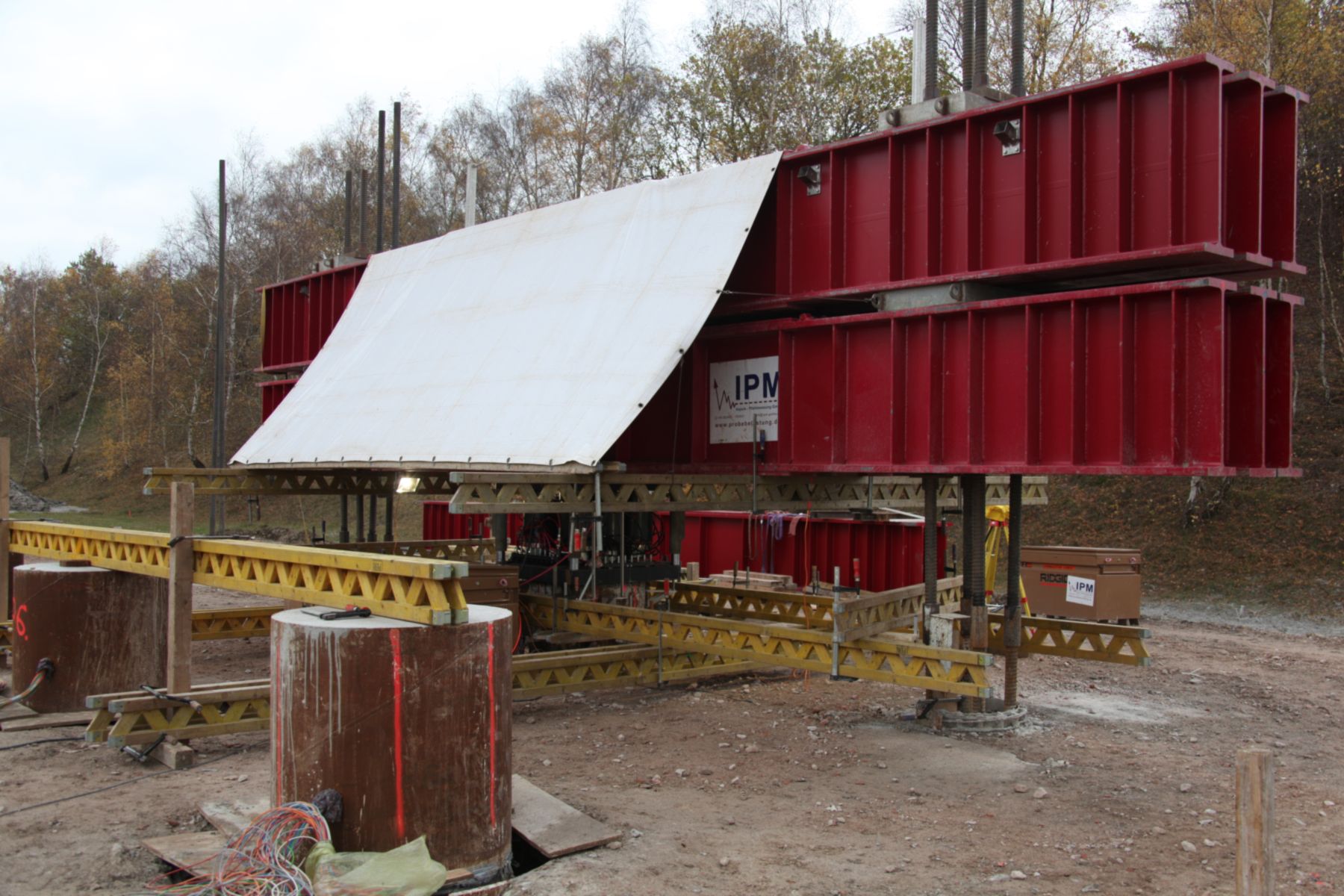
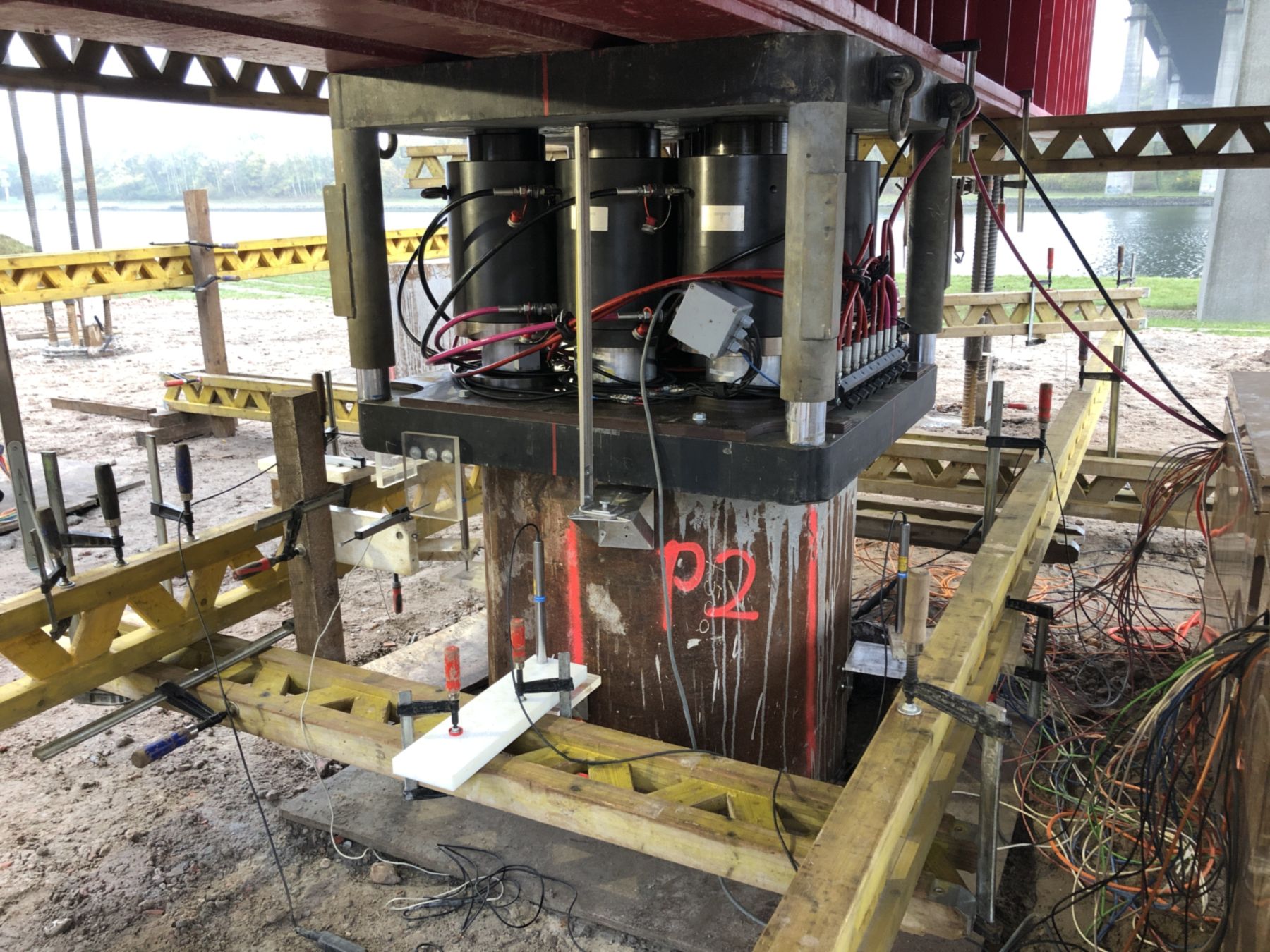
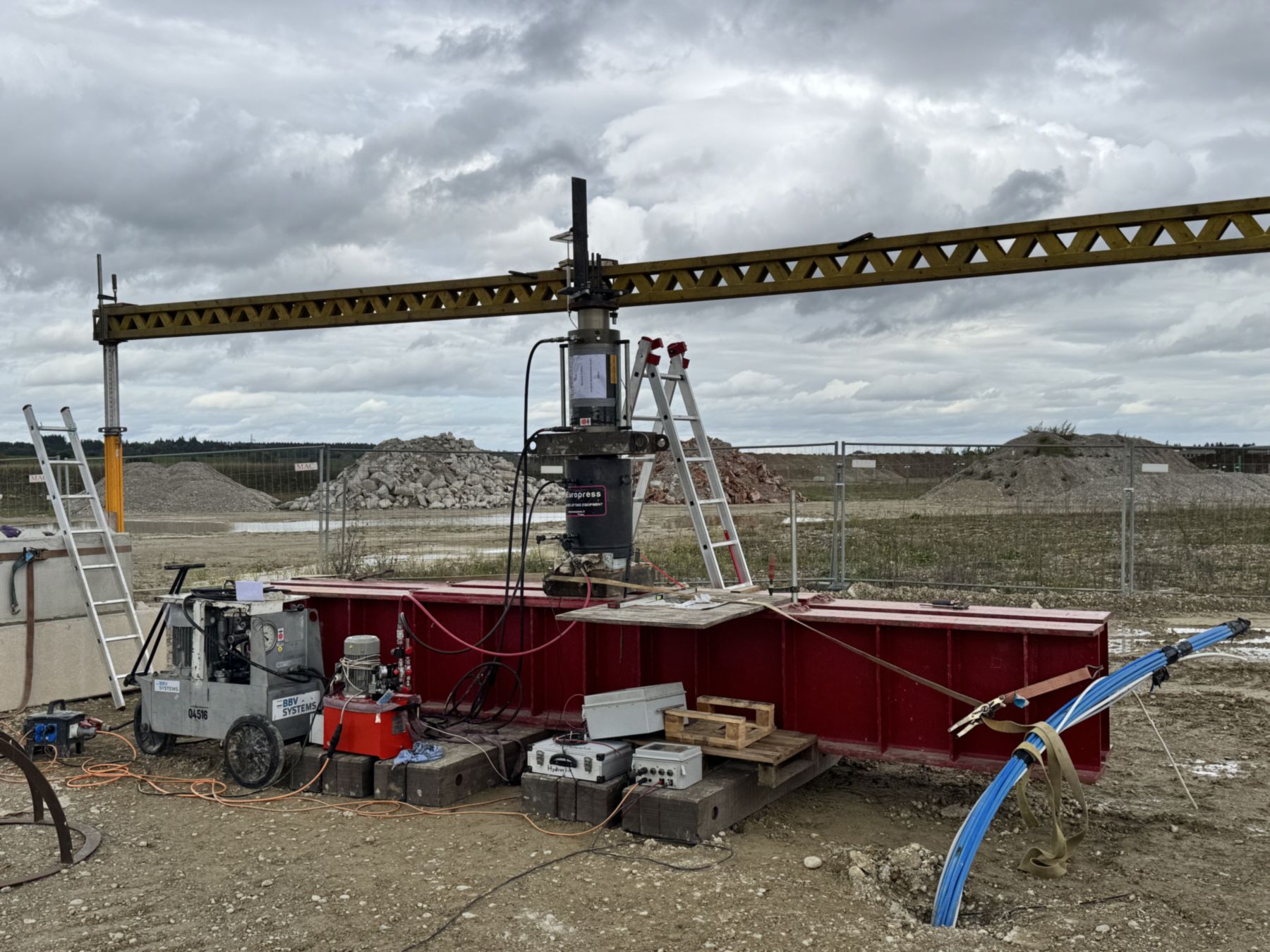
The load is generated by a hydraulic system with a unit up to 700 bar, electronically controlled constant holding and several identical two-way jacks. Force is measured via calibrated load cells, vertical and horizontal pile displacement via electric precision dial gauges with a resolution of 1/100 mm.
Steel beams and reaction piles serve as the abutment, dead load for lower loads. The control system is fully electronic and an in-house development. Load steps, hold times, cycles and creep rates are programmed in advance. The record is created during the measurement, not afterwards.
All pile types, force or displacement controlled, with or without pile instrumentation to measure skin friction, base resistance and integrity.
up to 40,000 kN
All pile types, force or displacement controlled, with or without pile instrumentation to measure skin friction. Our measurements include the Federal Chancellery in Berlin and steel tubes for the Baltic 2 offshore wind farm.
up to 15,000 kN
In compression or tension. Several piles are loaded simultaneously as a pile group.
group effect
Two piles are pushed apart or pulled together under force control. Displacement and inclination are measured synchronously at the pile head.
incl. chain inclinometer
The load is held constant under electronic control over days or weeks, with remote monitoring.
automatically controlled
Programmed load cycles for offshore and rail foundations. Baltic 2 was tested cyclically with 15,000 kN compression and tension.
per DIN 1054, EA-Pfähle
Tests per DIN EN 1537 on GEWI piles, grouted piles and round steel anchors, also in series.
no project too small
Driven piles made of ductile cast iron tubes, extended module by module via plug-in sockets. The length follows the driving resistance, the shaft is grouted with cement mortar depending on the system. Tested in compression and tension, also in series.
modular system, compression and tension
Precast reinforced concrete driven piles, steel tube and steel section piles, full displacement and auger piles, sheet pile sections and timber piles in existing structures. The test setup follows pile head, load and space on site.
setup project-specific
Sensors from Geokon, Glötzl and Bauer as well as fibre optic sensors, installed before concreting: rebar strainmeters, sister bars, base load cells, chain extensometers and chain inclinometers with up to eight measuring levels.
The results are the distribution of skin friction along the pile shaft, the exact base resistance, the pile integrity and the deflection line of the pile.
Load test without pile instrumentation. The pile's total resistance is recorded from load and displacement at the pile head.
Level 1
Load test with pile instrumentation. Shaft resistance including its distribution along the shaft and the base resistance are recorded.
Level 2
Force controlled in constant load steps or displacement controlled at a constant rate of displacement. The choice depends on the task and the ground.
Control
All questions on process, methods, standards and scheduling are in the FAQ section.
We test everything that carries load into the ground. The three size classes differ in setup, test equipment and effort. Example dimensions per class are listed below.
Tell us the project, the number of piles and the planned test load. You will receive a test concept with a quote within two business days.