
Test concept
Type, number and timing of tests, coordinated with structural design, ground investigation and construction schedule.
before tendering
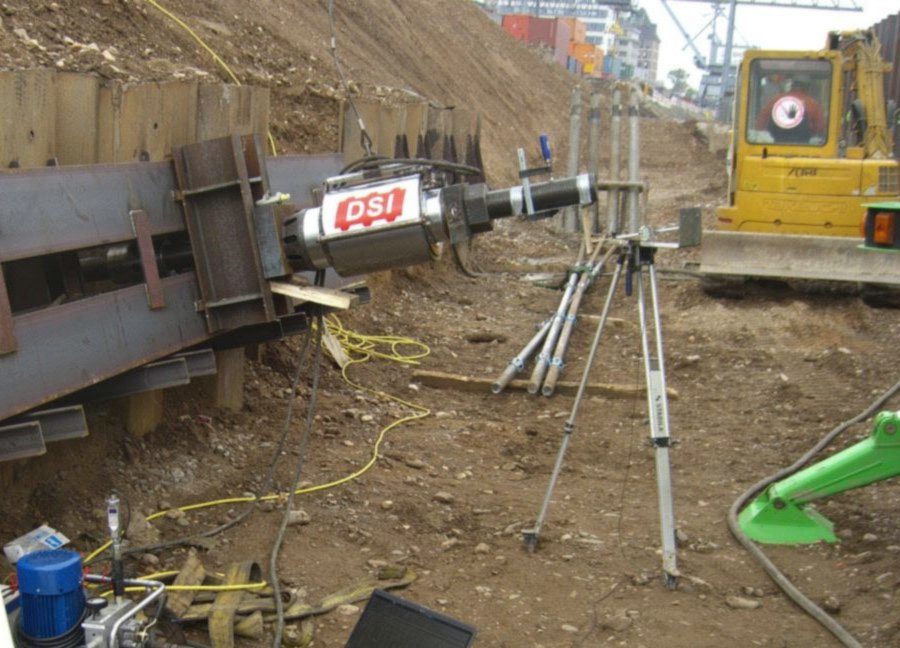
Anyone who tests only after tendering pays twice. We define the test concept while changes still cost nothing.
Pile foundations are regularly designed on the safe side because reliable measured values are missing. A load test replaces the safety margin with a number.
The result is shorter piles, fewer piles, or both. In many projects the optimization covers the testing costs several times over.
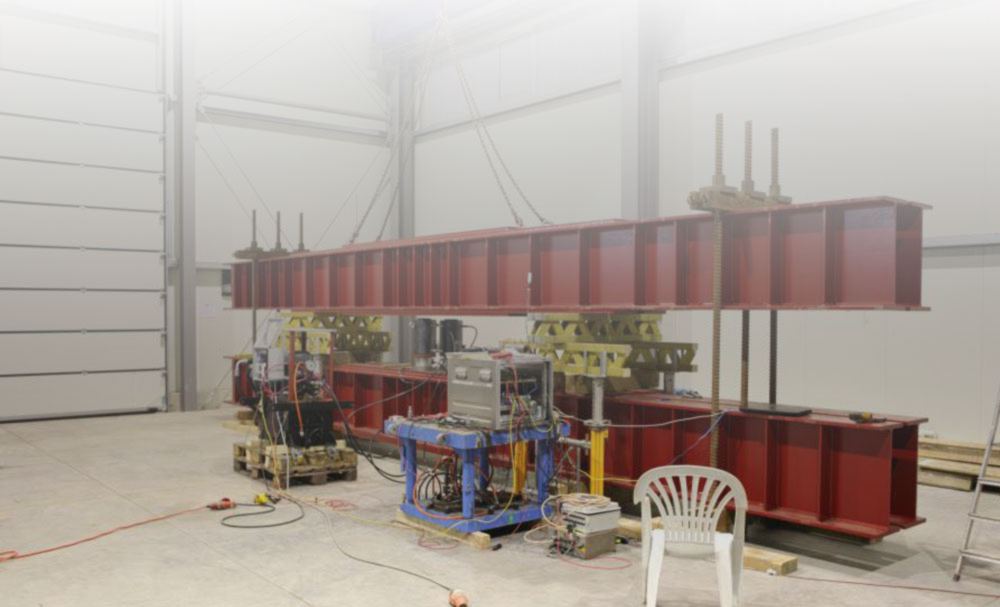
Type, number and timing of tests, coordinated with structural design, ground investigation and construction schedule.
before tendering
A load test before construction reduces the number and length of piles. The savings regularly exceed the testing costs.
fewer pile meters
Drafting support for bills of quantities, so the testing scope stays comparable and someone else does not end up calculating it.
Tender texts
DIN EN ISO 22477-1 and -4, EA-Pfähle, DIN 1054, Eurocode 7, DIN EN 1537. We advise which proof requires which effort.
Verification
Space requirements, reaction system, cranes, access routes. What fits on paper must also fit on site.
On-site planning
Number of test piles, test load, reaction system. We derive the scope from the project, not from a rule of thumb.
per EA-Pfähle
Subsequent determination of pile length on existing foundations. Based on travel time measurements at the pile head, evaluated via the material-dependent wave speed.
Measurement of settlement and inclination on structures, foundations and test constructions. Displacement resolution 1/100 mm, inclination via chain inclinometer.
Electronically controlled hydraulics keep load or elevation constant over hours and days. Used for long-term loading and for lifting components.
Presses, load cells and units are calibrated and documented in-house. Every test runs with a verified measurement chain.
All measurement and control systems are in-house developments, fully electronic since 1995. Custom setups are built for the respective project.
Control, data acquisition and evaluation run on in-house software. Load steps, holding times, cycles and creep values are freely programmable.
Piles are columns of concrete or steel that carry the weight of a structure through soft ground into load bearing layers. They reach up to 60 metres deep, are cast in place and are never accessible again. Whether a pile really carries the planned load and whether its concrete is free of defects is shown by measurement alone.
What goes wrong down there shows up in the schedule, in claims and in court. Four risks, four answers.
The flaw sits 18 metres down and only surfaces once the shell is up. The site then stops and nobody knows how many piles are affected.
Integrity testing right after concreting. 100 piles a day, results while still on site.
Without measurement the structural design works with table values and safety margins based on assumption. You pay for pile metres, concrete and reinforcement the ground never asked for.
A load test before execution. Measured bearing capacity regularly exceeds the assumption, which shortens the foundation.
Without measured data it is one statement against another: developer, main contractor, piling contractor, checking engineer. Expert reports, claims, delays. The cost ends up with whoever cannot prove anything.
Measurement records and CAPWAP analysis as solid evidence. Numbers end discussions.
DIN EN ISO 22477-1, EA-Pfähle and Eurocode 7 require proof of bearing capacity. Without it there is no approval, and the liability stays with the designer.
Test concept from the planning phase, coordinated with the checking engineer and the client.
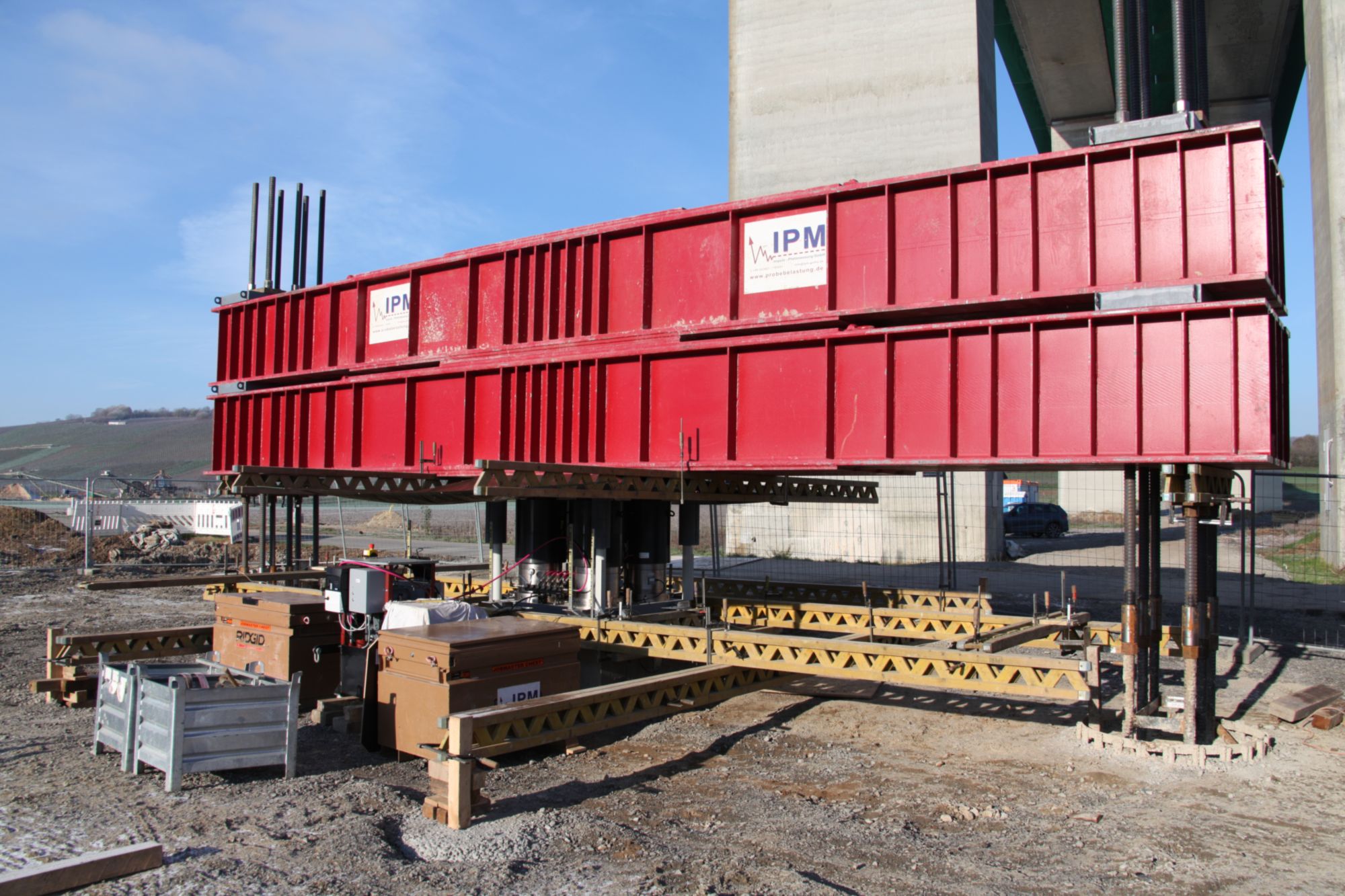
None of these steps is outsourced. That is why deadlines hold, even when the site shifts them at short notice.
Pile type, subsoil, load case. We determine which method actually provides proof and which one just costs money.
Our own beams, our own loading heads, our own measurement technology. One team, one point of contact, no chain of subcontractors.
Force, displacement, strain, time. Recorded with systems we built ourselves, which is why we understand them down to the firmware.
CAPWAP model analysis, load-settlement curve, verifiable report according to DIN EN ISO 22477-1. Usually within a few days.
All questions on process, methods, standards and scheduling are in the FAQ section.
Tell us the project, the number of piles and the planned test load. You will receive a test concept with a quote within two business days.