
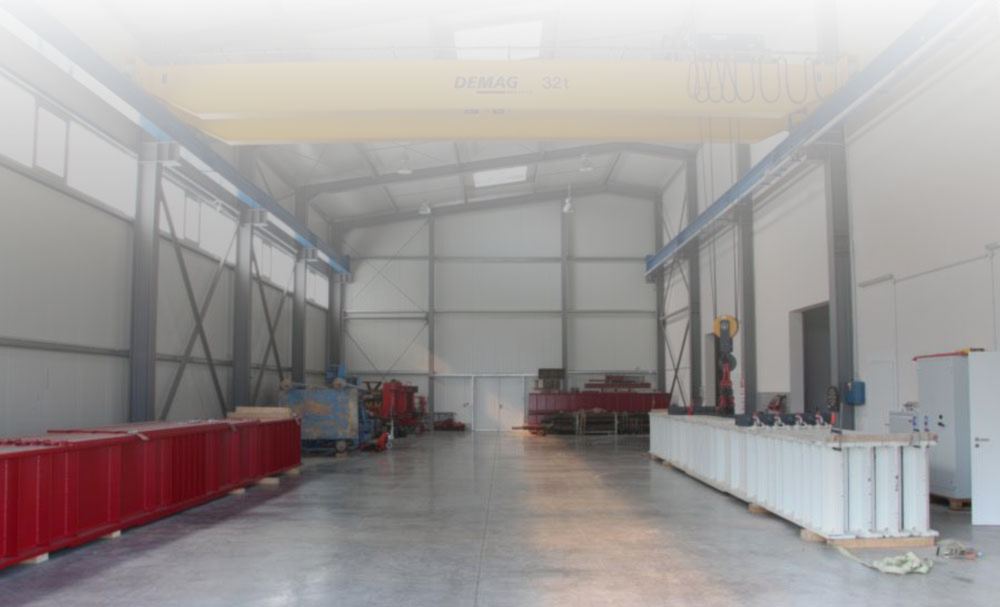
Integrity test in Dresden
Low-strain and cross-hole, large quantities. For Dresden and the Elbe valley, with own measurement technology and travel distance about 3 hours from Gotha.
What the test delivers.
Test of construction quality: length, cross-section, necking, defects. Low-strain from the pile head for the whole site, cross-hole between measuring tubes for the core of large bored piles.
Details on the method are on the service page Integrity test.
Elbe valley gravel and sand over Pläner marl and sandstone of the Elbe Sandstone Mountains, high and fluctuating groundwater level in the valley, on slopes weathering zones of varying thickness.
The rock surface rises and falls over short distances. Piles that are meant to bear on rock then end in weathered debris. The difference is not always cleanly separable in the borehole log, but it is in the measurement.
Integrity test in four steps.
- Clean pile heads, define measuring points
- Low-strain per pile, cross-hole between measuring tubes if needed
- Signal evaluation, flag conspicuous piles
- Report per pile, documented and legally sound
The structural engineer gets numbers instead of assumptions. Measured bearing capacity allows a proof per Eurocode 7 without blanket safety margins.
Dresden and the Elbe valley is geologically inconsistent. The test shows what the pile carries at exactly this spot, not what the ground model would suggest.
Differential settlement causes cracks, tilting and re-foundation. Tested piles are the cheapest part of structural stability.
Integrity test in Dresden, frequently asked questions
All questions on process, methods, standards and scheduling are in the FAQ section.
Integrity test in Dresden
A soil survey and pile concept are enough for a reliable answer. Travel distance about 3 hours from Gotha.
Request a project
Tell us the project, the number of piles and the planned test load. You will receive a test concept with a quote within two business days.